

Key Takeaways
Unit price
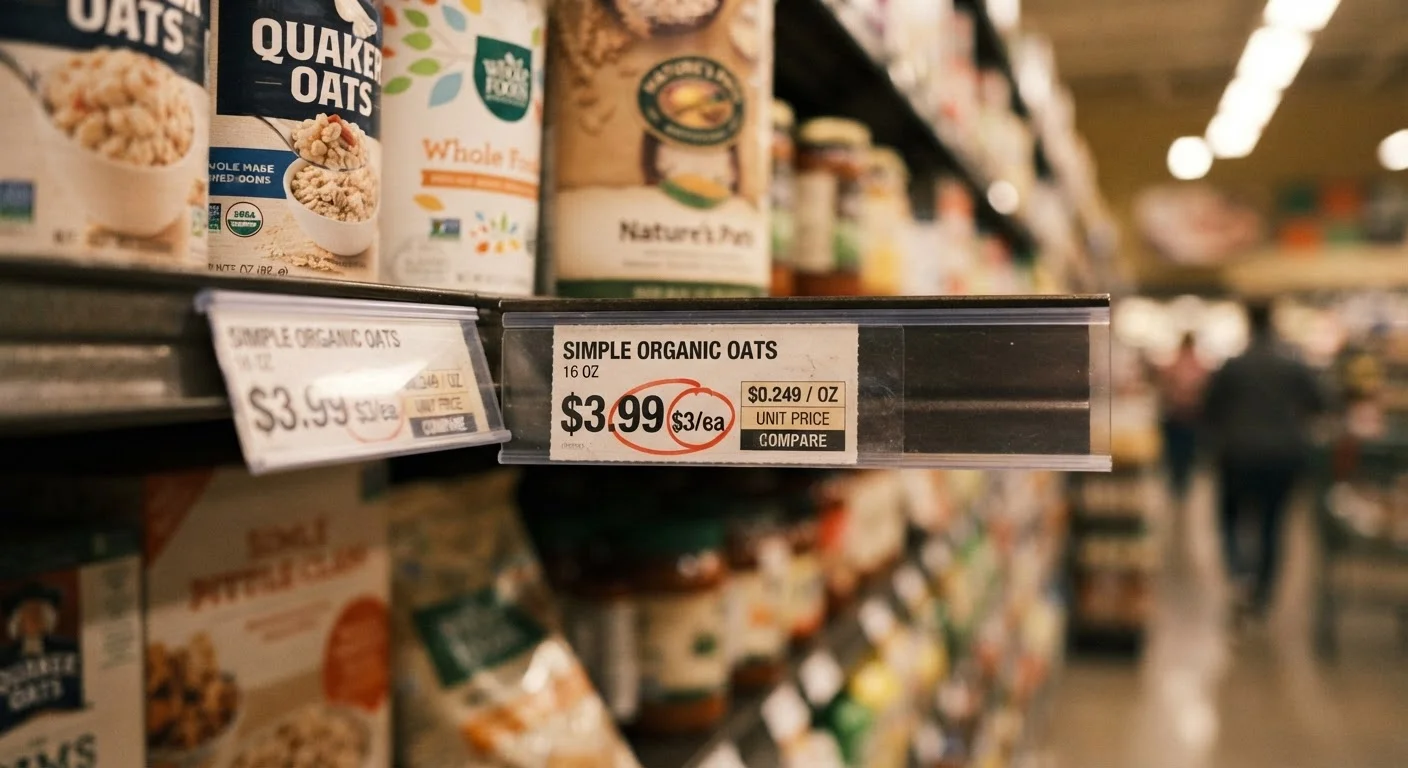
A unit price is the cost of a product broken down to a standard measure, such as per ounce, per pound, or per count. It appears on the shelf tag beneath the retail price, often in smaller print. Because different package sizes express quantity differently, the unit price puts every option on the same scale so a direct comparison is possible.
Unit pricing is required by law in many U.S. states, though the base unit used (e.g., per 100g vs. per oz) can vary by store and product category, so always confirm both tags use the same unit before comparing.
What the shelf tag is actually telling you
A grocery shelf tag carries two separate pieces of information. The large number is the retail price you pay at checkout. The smaller number, often labeled "price per oz" or "per unit," is the unit price. Most shoppers focus entirely on the first number and ignore the second, which makes accurate comparisons between package sizes or brands nearly impossible.
Consider two cans of black beans sitting side by side. One is 15 oz for $1.09 and the other is 29 oz for $1.89. The retail price of the larger can is higher, but the unit price runs lower: about 6.5 cents per oz versus about 7.3 cents per oz for the smaller can. Without the unit price, the larger can looks expensive. With it, the choice is straightforward.
This math extends to every aisle. Breakfast cereal, laundry detergent, cooking oil, yogurt, shampoo: any product sold in multiple sizes benefits from a unit-price check. The practical cost-cutting strategies that make the biggest difference week to week are often the ones applied at shelf level, before anything goes into the cart.
When bigger packages do not win
The common assumption is that larger packages always deliver a lower unit price. That assumption fails often enough to be worth examining before every major purchase. Stores run promotions on smaller sizes precisely because shoppers expect the big package to win. A 12-pack of sparkling water on sale can undercut the unit price of a 24-pack at full price by a meaningful margin.
Store brands add another wrinkle. A name-brand 64-oz container of oats might carry a lower unit price than the name brand's 32-oz version, but a store-brand 42-oz container might beat both. The unit price is the only number that resolves that three-way comparison cleanly.
30+
U.S. states with unit pricing laws
More than 30 states have passed some form of unit pricing requirement for grocery retailers, though specific rules on which products and store sizes are covered vary by state.
Up to 40%
Potential unit-price difference between sizes
Consumer studies have found that the unit price of the same product can vary by up to 40% between package sizes within a single store, depending on promotions and brand.
Bulk-bin items at natural grocery stores are another place where the unit price is not automatically low. Bulk bins eliminate packaging costs but not always the per-pound premium some specialty grocers charge. Check the posted price per pound against packaged alternatives on the same trip. The trade-offs families should weigh before buying in bulk go beyond price per unit and include storage space and spoilage risk.
How to read and calculate unit prices yourself
The formula is simple: divide the retail price by the quantity. If a 28-oz jar of pasta sauce costs $2.79, the unit price is $2.79 divided by 28, which is just under 10 cents per ounce. If the 15-oz jar of the same sauce is $1.69, that works out to about 11.3 cents per ounce. The larger jar wins here, but only by the math, not by assumption.
When shelf tags use different base units, you have to convert before comparing. A product priced per 100g and one priced per oz cannot be compared directly. There are 28.35 grams in an ounce, so multiplying the per-100g price by 0.2835 converts it to a per-oz figure. On a phone calculator at the shelf, this takes about 15 seconds.
Not every shelf tag is accurate or current. Prices change, tags get misplaced, and the unit displayed does not always match the quantity on the package. When a unit price seems unusually low or high, verify it against the package label. For families building repeatable shopping habits, understanding which staples deliver the most value per dollar becomes faster once unit-price reading is routine.
Putting unit price into a weekly shopping habit
Unit-price awareness pays off most when it becomes automatic rather than occasional. Start with the five or six products your household buys every week without much thought: cooking oil, eggs, canned goods, dried pasta, yogurt. Compare unit prices across sizes and brands for those items once, note the results, and you have a working baseline for future trips.
Stores sometimes rotate which size holds the better unit price to encourage variety in purchase behavior. A quick glance at the shelf tag on a repeat item takes two seconds and catches those shifts. Grocery store shelf placement also nudges shoppers toward higher-margin products, and knowing how product placement affects purchasing decisions helps you look past the eye-level options to where the unit-price winners often sit.
If a child or partner shares shopping duties, teaching unit-price math with one concrete example per trip builds the habit without turning grocery shopping into a lecture. Pick one aisle, compare two items, and let the numbers do the convincing. For families also trying to make sense of what those same products contain, the guide to reading nutrition labels pairs naturally with unit-price work: cost per unit and nutrition per serving together give a complete picture of value.