

Key Takeaways
Why grocery spending runs higher than it needs to
Most families overspend at the grocery store not because they buy too much food, but because they buy the wrong mix of food at the wrong times. Unplanned trips, shopping without a list, and relying heavily on convenience packaging all push costs up without improving what ends up on the plate.
The good news is that the habits driving overspending are fixable without switching to a restricted diet or spending hours in the kitchen. The steps below address the most common leaks in a typical family grocery budget, starting with planning and moving through store habits and ingredient choices.
For a closer look at how supermarket layout is designed to pull spending toward higher-margin products, see how grocery store layout influences buying decisions.
Step-by-step: building a leaner, nutritious grocery routine
These steps work together. Skipping the planning steps and jumping straight to the store makes the ingredient-choice steps much harder to apply consistently.
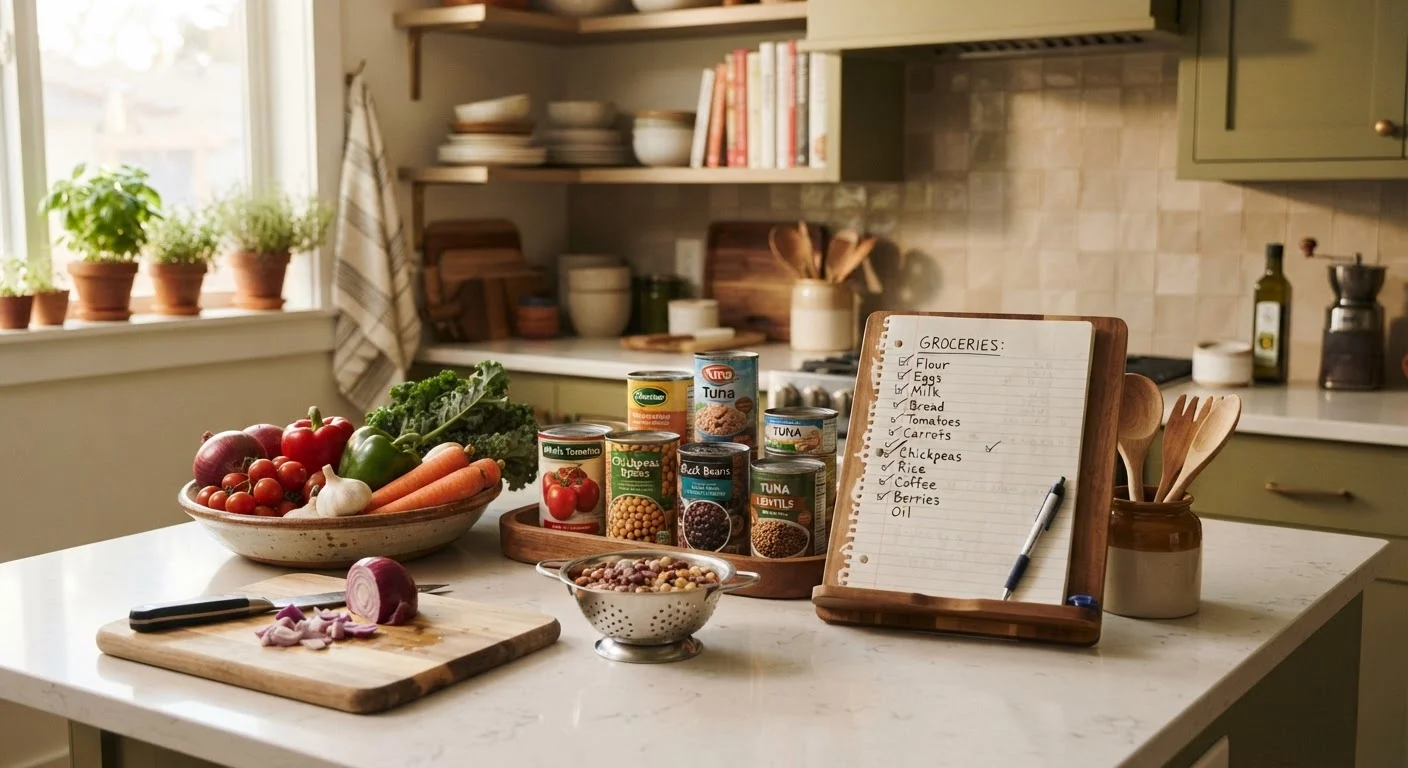
Plan meals before making a list
Write out five to seven dinners for the week before opening a grocery app or walking into a store. Work backward from those meals to list every ingredient you actually need. This single habit eliminates the duplicate purchases and forgotten items that quietly inflate weekly spending.
Use the pre-shop checklist for families to make sure nothing is missed and nothing unnecessary goes into the cart.
Build meals around lower-cost protein sources
Meat is typically the most expensive line item in a grocery budget. Replacing two or three meat-based dinners per week with legume-based or egg-based meals can reduce weekly protein costs noticeably without reducing protein intake. Eggs, dried lentils, canned chickpeas, and tofu all deliver meaningful protein per dollar.
When buying meat, whole cuts (a whole chicken versus pre-cut pieces, for example) generally cost less per pound and can be portioned at home.
Compare unit prices, not package prices
The shelf tag at most grocery stores shows a unit price (cost per ounce, per pound, or per count) alongside the package price. Always compare by unit price when choosing between sizes or brands. A larger package is not always cheaper per unit, and store brands frequently beat name brands on this measure.
Reduce food waste through storage and portion habits
Wasted food is wasted money. The USDA has estimated that households discard a substantial share of the food they purchase. Storing produce correctly (many vegetables last longer in the crisper drawer away from ethylene-producing fruits like apples and bananas), cooking perishables before they turn, and freezing bread or meat before the use-by date all extend the life of what you already bought.
Planning one meal per week around leftovers or about-to-expire ingredients keeps that food from becoming trash.
Use store loyalty programs strategically
Most major grocery chains offer free loyalty programs that apply automatic discounts on rotating items. Signing up costs nothing. The habit worth building is checking the weekly digital offers before finalizing your meal plan, then adjusting one or two meals to take advantage of discounted proteins or produce. This is different from planning meals around sales impulsively, which tends to increase spending.
For a broader look at the financial trade-offs involved in one popular money-saving approach, buying in bulk has real advantages but also real limits worth understanding before committing.
Ingredient swaps that protect nutrition and the budget
A few ingredient categories deliver outsized savings without nutritional compromise.
Dried legumes. Dried beans and lentils cost a fraction of canned protein options per cooked serving and are among the most nutrient-dense foods available. Cooking with dried beans and lentils is more straightforward than many families expect, and the variety of uses across soups, stews, and side dishes makes them genuinely flexible.
Frozen vegetables. The belief that frozen vegetables are nutritionally inferior is not well supported by evidence. Freezing typically happens shortly after harvest, which preserves most vitamins. Frozen vegetables are not a nutritional compromise, and they reduce waste because you use only what you need.
Store-brand staples. For shelf-stable items like canned tomatoes, pasta, oats, and oils, store-brand versions generally match name-brand quality at 20 to 30 percent lower cost. The ingredient lists are often identical.
Building a reliable set of pantry staples around these categories gives every weekly menu a low-cost foundation. See pantry staples that earn their place in every weekly meal plan for a practical starting inventory.
Reading nutrition labels helps you compare value
When choosing between two similar products at different price points, the nutrition label tells you what you are actually getting per serving. Knowing how to read serving size, calories, and key nutrients lets you make a genuine cost-per-nutrient comparison. See nutrition labels decoded for real family meals for a plain-language guide.