

Key Takeaways
Grocery store product placement
Grocery store product placement refers to the deliberate decisions retailers make about where specific items appear on shelves, in aisles, and throughout the store. These decisions are guided by consumer psychology research, shelf-space agreements with manufacturers, and store profitability goals. The layout is designed to influence how long shoppers spend in the store and what ends up in their carts.
Retailers often charge manufacturers a 'slotting fee' for premium shelf positions, particularly eye-level placements and end-cap (aisle-end) displays. This cost is typically passed along in product pricing.
The store is not laid out for your convenience
Most shoppers assume a grocery store's layout reflects practicality: produce near the entrance because it gets delivered fresh, dairy at the back because it needs refrigeration. These explanations are partly true, but they are not the whole story. Every major placement decision in a full-size supermarket is made to influence purchasing behavior, typically by slowing shoppers down and increasing exposure to higher-margin items.
Produce sections are placed at the entrance partly because research indicates shoppers who buy fresh vegetables early feel 'virtuous' and are subsequently more willing to add indulgent or impulse items to their carts. The pleasant sensory experience of colorful, fresh food also sets a positive emotional tone for the rest of the trip. Neither of these effects happens by accident.
Understanding this does not require cynicism about retailers. It just means entering the store with clear intentions rather than relying on the layout to guide you. The weekly pre-shop checklist is one practical tool for doing exactly that.
Eye level, end caps, and the checkout lane
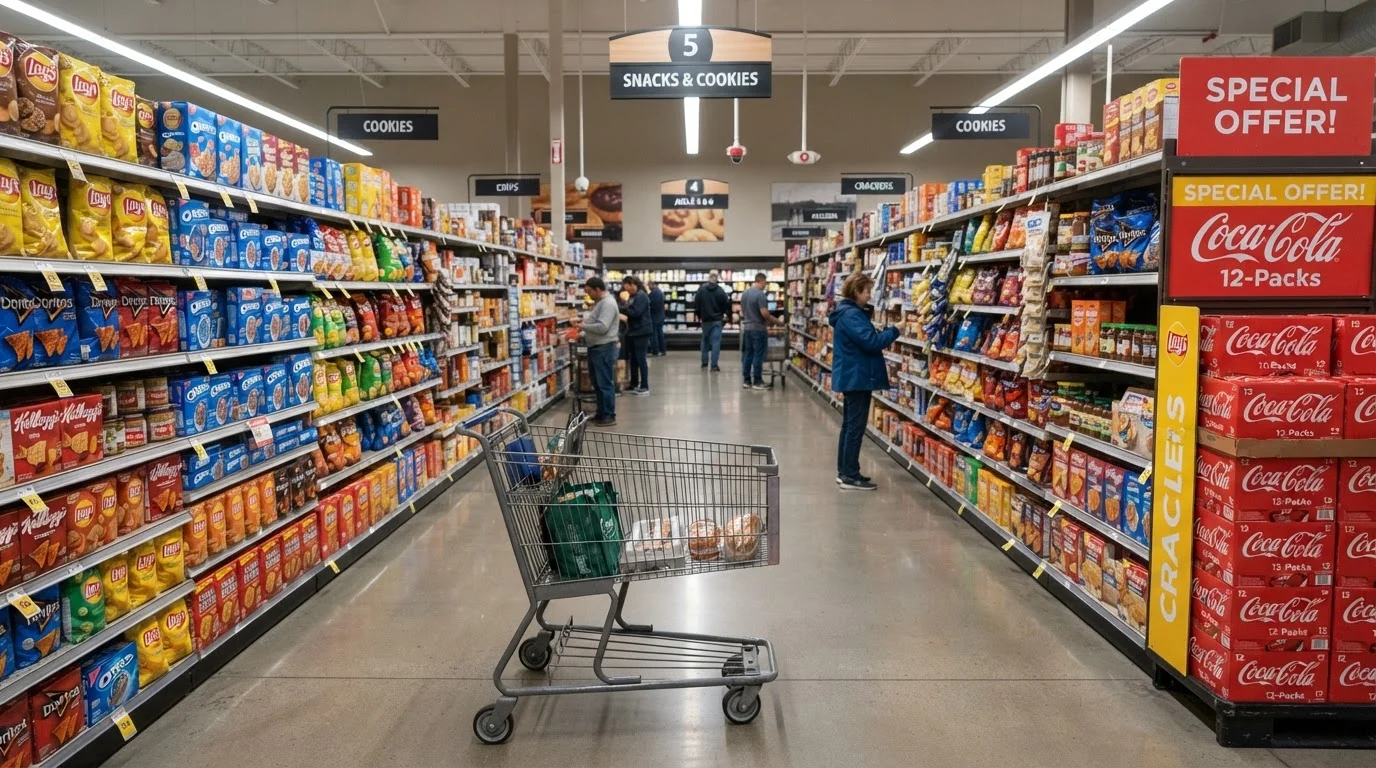
Three placement zones account for a large share of unplanned spending: eye-level shelves, aisle end-caps, and the checkout lane.
Eye-level shelves hold products that generate the highest profit margins for the store, often because manufacturers pay slotting fees for those spots. Generic and store-brand versions of the same product category typically sit on lower shelves, sometimes below knee height. Reaching down to check those options takes an extra five seconds, but the price difference can be meaningful over a month of shopping. For more on comparing shelf options accurately, see how unit price math works.
End-cap displays (the shelving units at the end of each aisle) carry a strong visual implication of a sale or special deal. Consumer research has consistently found that shoppers perceive end-cap products as discounted even when no price reduction exists. Before adding an end-cap item to your cart, check the shelf tag for the unit price and compare it to the in-aisle equivalent.
Checkout lanes stock small, low-cost, high-impulse items such as candy, gum, and single-serve drinks. These items are selected because shoppers waiting in line have time to browse and the per-item cost feels trivial. Multiply those small decisions across weekly trips and the total adds up.
Scan all three shelf heights before choosing
When you reach for a product, pause and check the shelf above and the shelf below before adding it to your cart. The eye-level option is often the highest-margin item in that category. Store-brand or lower-price equivalents are frequently one shelf down. This single habit, applied consistently, can reduce grocery spending without changing what you buy.
How store layout shapes your route
Staple items that nearly every shopper needs (milk, eggs, bread, butter) are placed in different corners of the store, usually at the perimeter and toward the back. This forces a longer walking route and increases the number of aisles a shopper passes through. More aisle exposure means more opportunity for unplanned purchases.
The perimeter of most supermarkets contains fresh produce, meat, dairy, and bakery items. These are genuinely the most nutritious and least processed foods in the store. The interior aisles hold packaged, shelf-stable goods with longer margins and longer shelf lives. A shopper who can meet most of their family's nutritional needs by shopping the perimeter and dipping into only a few interior aisles (for staples like canned goods, dry grains, and frozen vegetables) will generally spend less and eat more whole foods. This connects directly to the strategies covered in cutting grocery costs without sacrificing nutrition.
Children's products follow a separate placement logic: cereals, snacks, and juices marketed to kids are stocked at a lower shelf height, within a child's line of sight. Families shopping with children may want to be aware that the lower shelf placement in cereal and snack aisles is aimed partly at younger shoppers.
Putting this knowledge to practical use
Knowing the layout strategy does not mean memorizing a floor plan. It means building a few habits that counteract the default nudges.
- Write a list organized by store section before you go. Entering with a route in mind reduces the time you spend browsing and the number of unplanned items you encounter.
- Check upper and lower shelves before choosing a product. The eye-level item is rarely the only option in that category.
- Treat end-cap displays as requiring a price check, not as confirmed deals.
- If you are buying a large quantity of something, confirm the unit price is actually lower before committing. Bulk buying has trade-offs that go beyond the sticker price.
Store layouts will not change, and there is nothing wrong with them as a retail practice. What changes is how deliberately you move through one.