

Key Takeaways
Why $150 is a workable starting point
The USDA publishes monthly food plan estimates that put a "low-cost" budget for a family of four (two adults, two school-age children) in the range of $150 to $200 per week, depending on ages and activity levels. Hitting the lower end of that range is possible, but it requires a system rather than good intentions.
At $150, you have roughly $5.36 per person per day across three meals and snacks. That is not generous, but it is enough when you stop buying food by instinct and start buying by plan. The framework below breaks that process into concrete steps. If your household budget is already under pressure, the monthly budgeting walkthrough can help you figure out how much your family can realistically allocate to groceries before you set a firm number.
What you need before you start
Gather these before planning your first week:
What you will need
Having last month's receipts or bank statements on hand helps you spot where money currently disappears, whether into premium cuts of meat, packaged snacks, or repeated impulse purchases at checkout.
Step-by-step: building your weekly plan
Follow these steps in order. Skipping the planning phase and going straight to the store is the most common reason families overspend. The common first-month meal planning mistakes article covers this pattern in detail if you want more context before starting.
Set your budget allocation by category
Divide your $150 before you plan a single meal. A distribution that works for many families:
- Protein (meat, eggs, legumes, canned fish): $40 to $50
- Produce (fresh and frozen vegetables, fruit): $30 to $35
- Grains and starches (rice, oats, pasta, bread, potatoes): $20 to $25
- Dairy and alternatives: $15 to $20
- Pantry top-ups and condiments: $10 to $15
These ranges shift week to week based on what needs restocking. Write down your actual targets before opening any store app or circular.
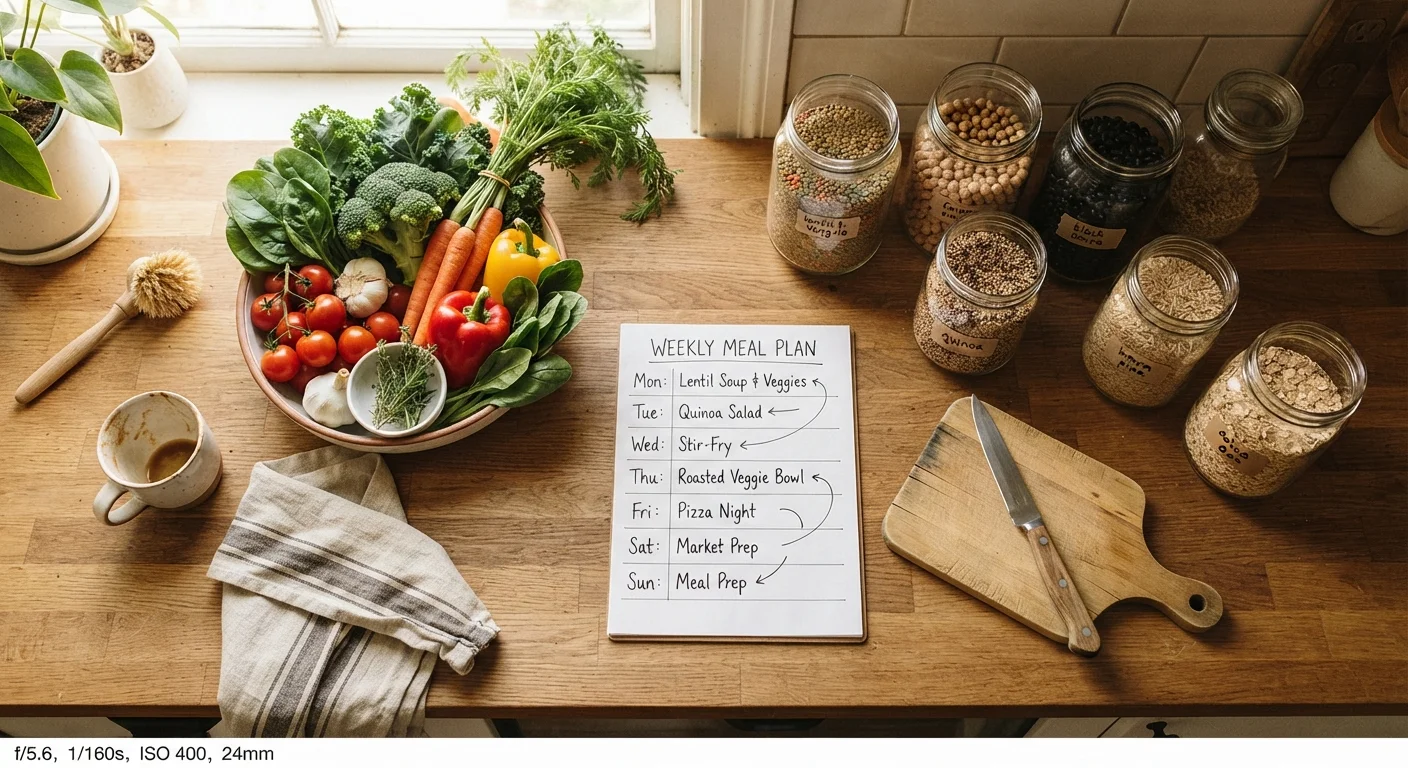
Plan 5 dinners and 2 flex nights
Plan five dinners in detail and leave two nights as flex slots: one for leftovers and one for a low-cost backup meal (eggs, pasta, or a grain bowl). Planning all seven dinners often leads to overbuying because real life rarely cooperates with a rigid schedule.
Build each dinner around a protein, a vegetable, and a starch. Examples that stay under $2 per serving for four people:
- Lentil soup with crusty bread
- Baked chicken thighs with roasted potatoes and frozen broccoli
- Black bean tacos with shredded cabbage and salsa
- Pasta with canned tomatoes, garlic, and white beans
- Fried rice with frozen peas, eggs, and carrots
Plan breakfasts and lunches in batches, not individually
Rotating two or three breakfast options and two lunch options for the entire week cuts planning time and keeps ingredient lists short. Practical batch choices:
- Breakfasts: oatmeal with fruit, scrambled eggs with toast, or whole-grain cereal with milk
- Lunches: sandwiches with deli meat or peanut butter, leftover dinner portions, or a bean and rice bowl
Packing school lunches from home rather than purchasing them at school can save $25 to $40 per week for two children, depending on district pricing.
Build your shopping list from the meal plan, not from memory
Go through each planned meal ingredient by ingredient. Check what you already have. Write only what you need to buy, with quantities. Organize the list by store section (produce, proteins, dairy, canned goods, frozen) so you can move through the store without backtracking, which reduces impulse purchases.
Compare store-brand prices against national brands for every staple on your list. On items like canned beans, pasta, oats, and frozen vegetables, store brands typically save 20 to 40 percent with no meaningful difference in nutritional content.
Batch cook two base ingredients on one day
Pick one day each week to cook in bulk. Preparing a large pot of grains (rice, farro, or barley) and a large batch of protein (a whole chicken, a pot of beans, or hard-boiled eggs) gives you ready components for three to four meals without additional cooking time on weeknights.
This step directly reduces the temptation to order takeout when a weeknight gets busy, which is one of the fastest ways a food budget breaks down.
Making the budget hold week after week
The first week of a new budget is usually the hardest because your pantry is not yet stocked with the staples that lower per-week costs over time. Oils, vinegars, dried spices, canned tomatoes, and dried legumes cost more upfront but reduce spending on subsequent shopping trips. See pantry staples that earn their place in every meal plan for a prioritized list of what to build first.
Protein is typically the largest line item in a grocery budget. Dried beans and lentils cost a fraction of ground beef or chicken breasts per gram of protein. A bag of dried lentils that feeds four for two meals often costs less than two dollars. The guide to cooking dried beans and lentils walks through how to prepare them efficiently, including overnight soaking and pressure-cooker shortcuts.
Frozen vegetables are worth keeping in rotation. Frozen spinach, peas, corn, and broccoli are picked and frozen at peak ripeness, so their nutrient profiles are comparable to fresh. They also eliminate the spoilage loss that quietly inflates weekly food costs when fresh produce goes unused.
Check the unit price, not the package price
Most grocery store shelf tags include a unit price (cost per ounce, pound, or count). This number is the only reliable way to compare products of different sizes. A larger package is not always cheaper per unit, and a sale price is not always a deal if you were not going to use the full quantity. Train yourself to read the unit price first, and you will make faster, more accurate comparisons without mental math.
Before each shopping trip, run through a short checklist to avoid duplicating items you already have and to catch anything your meal plan needs. The pre-shop checklist for families takes about five minutes and consistently prevents the small purchases that push totals past budget.
For a wider set of strategies on reducing costs without reducing nutrition, cutting grocery costs without sacrificing nutrition covers store habits and substitution strategies that pair well with the framework above.