

Key Takeaways
Why most chore systems fall apart
Most families have tried some version of a chore system. A chart goes up on the fridge, everyone agrees to it for about two weeks, and then it quietly disappears. The problem is rarely motivation. It is usually structure: the tasks are vague, the ownership is unclear, or the system asks too much of people who already have packed schedules.
A chore system that holds up over months and years is built on a few simple principles. Tasks need clear owners. Expectations need to be specific enough that a child or partner knows when a job is actually done. And the whole thing needs to be easy to look at and follow without someone acting as an enforcer every day.
Before setting up anything new, it helps to take stock of what the household actually needs. List every recurring task, from daily dishes to monthly cleaning behind appliances. Many families are surprised by how long that list gets. For seasonal and less obvious maintenance items, a reference like a room-by-room seasonal checklist can fill in gaps you might not have thought about.
How to divide tasks fairly
Fair does not always mean equal. A ten-year-old cannot do everything an adult can, and someone working long hours may have less bandwidth on weekdays. The goal is a division that feels reasonable to everyone involved, not a perfect 50/50 split on paper.
Start by sorting tasks into three buckets: daily (dishes, wiping counters, feeding pets), weekly (vacuuming, laundry, bathroom cleaning), and monthly or occasional (deep cleaning, outdoor work, organizing a closet). Then match tasks to people based on ability, schedule, and what they can genuinely be held accountable for.
Children as young as four or five can handle simple jobs like putting toys away or carrying their plate to the sink. Older kids can take on full weekly tasks. Giving children real responsibility, rather than token jobs, builds habits that carry into adulthood. If your home is on the smaller side, organization strategies for compact spaces can make it easier for everyone to keep their assigned areas tidy.
Making the system visible and specific
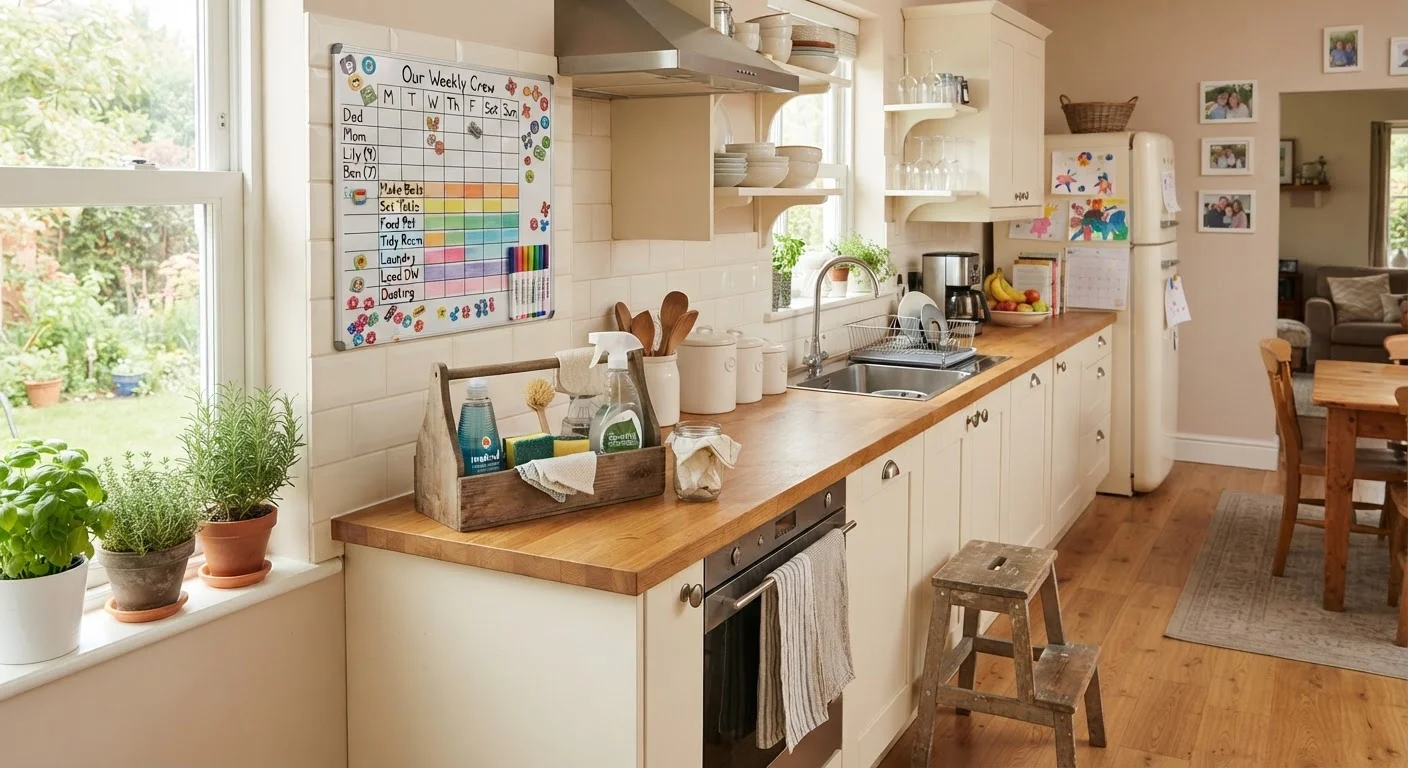
A chore system only works if people can see it without being reminded. A printed or handwritten chart posted in a common area, like the kitchen or a hallway, is still one of the most reliable tools. It does not need to be elaborate. A simple grid with names, tasks, and days is enough.
Specificity matters more than most families realize. "Clean the bathroom" means different things to different people. Breaking it down, toilet, sink, mirror, floor, removes ambiguity and makes it easier to confirm the job is done. When a child can check off a specific item, they know what finished looks like.
Digital tools work for some households, particularly ones where everyone has a phone. Shared apps or calendar reminders can prompt tasks automatically. What matters is that the format fits how your family actually operates, not how you wish it operated.
Keeping it going after the first month
The first few weeks of any new system tend to go well because everyone is paying attention. The real test is month two and three, when novelty fades and habits are still forming.
A short weekly check-in, five to ten minutes at a consistent time, is the single most effective tool for keeping a chore system alive. It does not need to be a formal meeting. A quick conversation over dinner or during a car ride works. The point is to catch what slipped, adjust anything that is not working, and give credit where it is due.
Rotating tasks every few months prevents the resentment that builds when one person always handles the least desirable jobs. It also means everyone in the household eventually knows how to do every task, which matters when schedules shift or someone is sick. For households managing broader routines and budgets together, checking in on those patterns is worth doing too. Signs that a household system is strained often show up in spending and budgeting patterns before they show up anywhere else.
Consistency in hygiene and cleaning tasks also has real health benefits. Everyday hygiene routines with strong evidence behind them are easier to maintain when they are built into a household system rather than treated as individual choices.