

Key Takeaways
Why hygiene evidence matters for families
Health information circulates constantly through social media, word of mouth, and well-meaning family advice. Not all of it holds up. For budget-conscious families, acting on inaccurate hygiene beliefs can mean spending money on products that do not deliver, or skipping habits that genuinely reduce illness and sick days.
This article focuses on hygiene practices with clear public health backing, particularly hand-washing, masking, and respiratory habits, and corrects some of the most common misconceptions families encounter. For broader context on preventive routines, see our guide on preventive care for the whole family.
This article is for general health education only and is not medical advice. Consult a qualified healthcare provider for guidance on your family's specific health needs.
Myth
Antibacterial soap is more effective than regular soap at preventing illness.
Fact
Plain soap and water are equally effective for everyday hand-washing because the goal is physical removal of germs, not killing them on contact.
The U.S. Food and Drug Administration has concluded that there is no scientific evidence that over-the-counter antibacterial soaps are more effective at preventing illness than regular soap. Many antibacterial products contain triclosan or triclocarban, ingredients the FDA ruled should not be marketed in consumer soaps without demonstrated safety and efficacy data. Lathering with any soap and rinsing thoroughly dislodges viruses and bacteria from the skin. The soap itself loosens the bond between germs and your hands; running water carries them away.
Myth
Hand sanitizer works just as well as soap and water for all situations.
Fact
Alcohol-based hand sanitizer is a practical alternative when soap is unavailable, but it does not remove all types of germs and is less effective on visibly dirty hands.
Hand sanitizers with at least 60% alcohol are effective against many viruses and bacteria, according to the CDC. However, they do not adequately eliminate norovirus, Cryptosporidium, or Clostridioides difficile (C. diff). They also cannot physically remove dirt, grease, or harmful chemicals. Use sanitizer as a convenience measure when you cannot access a sink, but return to soap and water when hands are visibly soiled or when you have been around someone with a stomach illness.
Myth
Wearing any mask provides the same level of protection against respiratory illness.
Fact
Mask type, fit, and consistent use all affect how much protection a mask actually provides.
Research published during and after the COVID-19 pandemic confirmed that well-fitting masks reduce the spread of respiratory droplets. However, a loosely worn surgical mask or a single-layer cloth covering provides substantially less protection than a properly fitted respirator-style mask. Gaps at the nose bridge or sides allow droplets to bypass the filter material. The CDC and public health researchers have consistently noted that wearing a mask below the nose, removing it frequently, or using a damaged mask reduces its protective value significantly.
Myth
You only need to wash your hands after using the bathroom.
Fact
Hand-washing is recommended at several points throughout the day, including before eating, after handling raw food, after blowing your nose, and after touching high-contact surfaces.
The CDC outlines specific moments when hand-washing is especially important: before preparing or eating food, after touching raw meat or eggs, before and after caring for someone who is sick, after changing diapers, after handling garbage, and after touching animals or their food. In a household with children, hands also pick up pathogens from shared toys, doorknobs, and faucet handles. Teaching children to identify these moments, rather than making hand-washing a punishment or afterthought, builds more durable habits.
Myth
Opening windows and airing out a room eliminates germs effectively.
Fact
Ventilation can reduce the concentration of airborne particles indoors, but it does not sterilize a room or replace other hygiene practices.
Improved indoor air circulation does dilute airborne respiratory particles and may reduce transmission risk in enclosed spaces, which is why the CDC and the Environmental Protection Agency recommend improving ventilation alongside other precautions. However, opening a window does not disinfect surfaces, remove contact-spread pathogens, or protect people from direct exposure to an infectious person nearby. Ventilation works best as one layer in a broader approach that includes hand-washing, surface cleaning, and staying home when sick.
Myth
Children who get sick frequently will naturally build stronger immune systems, so hygiene is less important for them.
Fact
While immune development is a normal part of childhood, hygiene practices protect children from serious preventable infections and reduce household spread.
Childhood illnesses do contribute to immune experience over time, but this does not mean hygiene should be relaxed. Some infections that spread easily among children, including influenza, pertussis (whooping cough), and certain strains of streptococcal bacteria, carry real risks of complications. Good hygiene reduces the severity and frequency of illness in children and limits transmission to vulnerable household members, including infants, elderly relatives, or anyone who is immunocompromised. Routine hand-washing and respiratory hygiene (covering coughs and sneezes) protect the whole family, not just the child practicing them.
Building hygiene routines that stick across ages
Knowing the correct information is only half the challenge. Getting a household of different ages to practice it consistently is the other half. Toddlers need short, repeated demonstrations. School-age children respond well to clear reasons rather than just rules. Teenagers tend to follow habits more reliably when they understand the logic rather than receiving mandates.
A few practical approaches that work across age groups:
- Post a simple visual reminder near bathroom and kitchen sinks showing the 20-second hand-washing steps.
- Tie hand-washing to existing anchors: before dinner, after school, after outdoor play. This reduces the mental load of remembering when.
- Keep tissues and waste bins accessible in common areas so covering coughs and disposing of tissues is easy, not inconvenient.
- Model the behavior consistently. Children in particular learn hygiene norms by watching adults in the household.
If you are working on building household routines more broadly, the household chore system guide covers strategies for dividing responsibilities in ways that hold up over time.
Hand-washing is your first line of defense
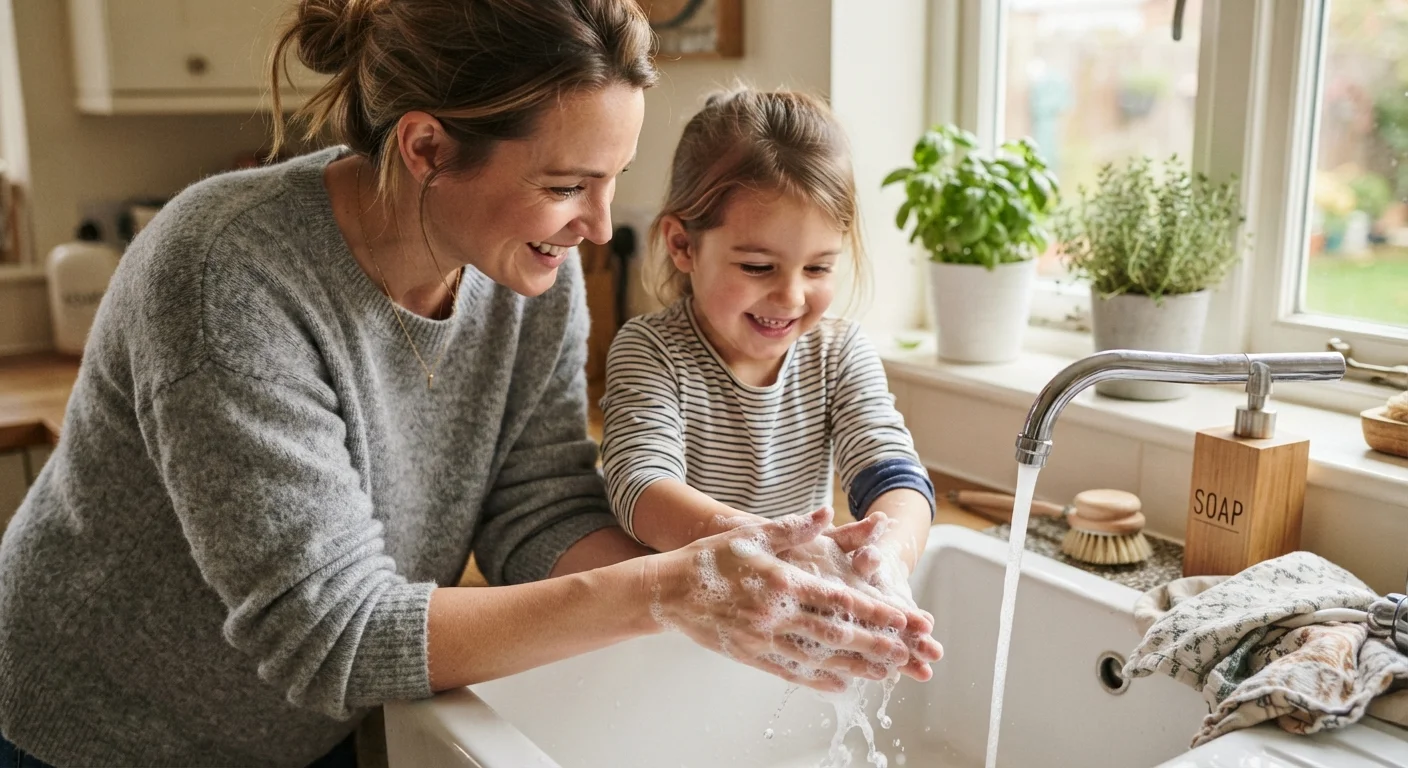
The Centers for Disease Control and Prevention identifies hand-washing with plain soap and water as one of the most effective ways to prevent the spread of many common illnesses, including respiratory and gastrointestinal infections. No special product is required. The mechanical action of scrubbing for at least 20 seconds removes pathogens from skin surfaces. If you or a family member shows symptoms of a serious illness, consult a qualified healthcare provider rather than relying on hygiene measures alone.
Surface cleaning and respiratory hygiene
Hand-washing addresses one transmission route. Respiratory hygiene and surface cleaning address others. Viruses that spread through droplets can land on shared surfaces, doorknobs, light switches, and shared devices, and remain viable for variable periods depending on the pathogen and the material.
Routine cleaning of frequently touched surfaces with an EPA-registered disinfectant during illness seasons reduces surface-based transmission. This does not require extensive products or time: a focused effort on the highest-contact spots takes only a few minutes.
Respiratory hygiene is straightforward but often incomplete in practice. Coughing or sneezing into the crook of the elbow, rather than the hand, reduces immediate hand contamination. Disposing of used tissues promptly and then washing hands prevents secondary transfer. These steps matter more in households where one person is already ill.
For families who track health patterns over time, maintaining a basic household health record can help identify which illnesses recur and whether hygiene adjustments are having an effect. Our article on keeping a family health record explains what information is worth documenting.
Consistent hygiene does not require expensive products or elaborate systems. The habits with the strongest evidence, soap, water, correct mask fit when relevant, and thoughtful respiratory practices, are the most accessible ones available.