

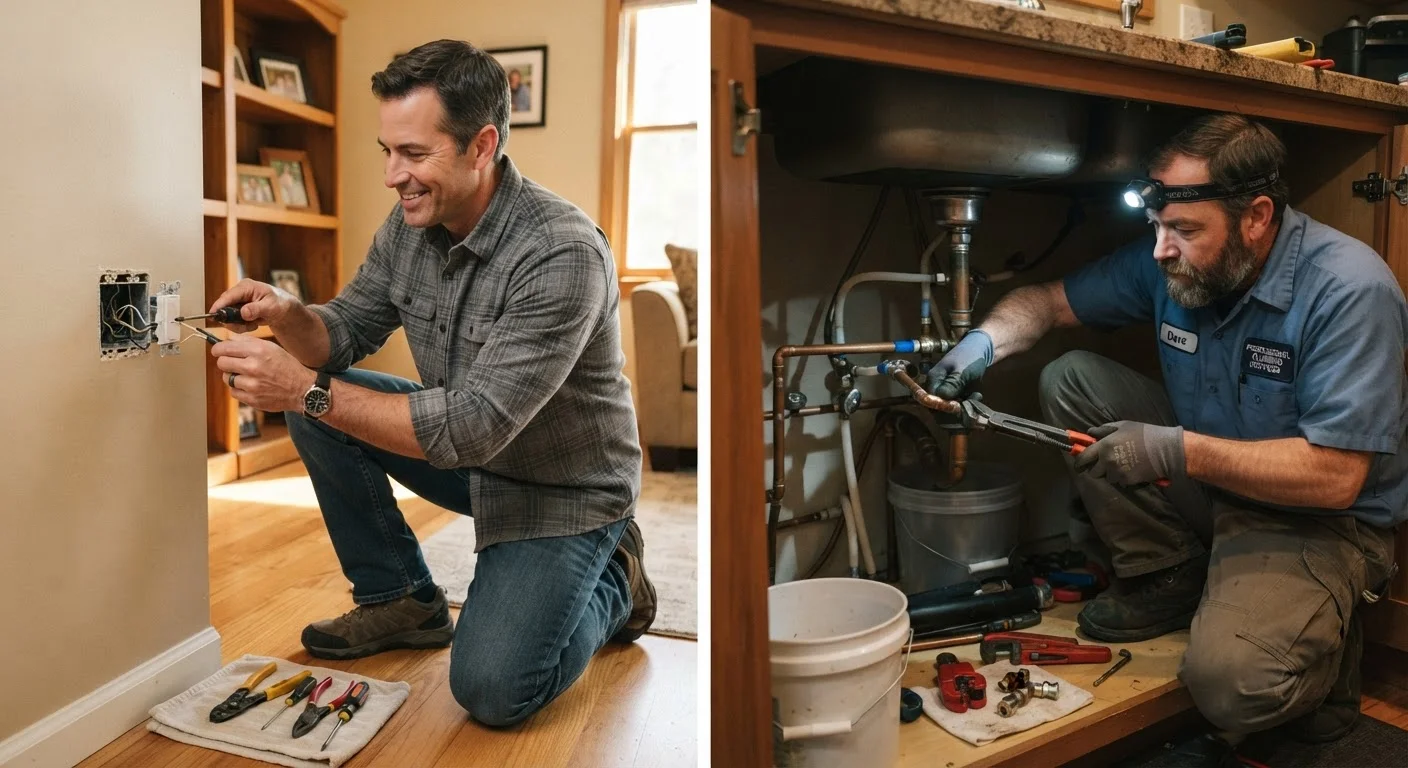
Key Takeaways
Our Verdict
DIY home maintenance makes sense for routine, low-risk tasks where mistakes are easy to fix and no permit is required. When a job involves your home's electrical panel, gas lines, structural elements, or main plumbing stack, the cost of hiring a licensed professional is almost always worth it. The middle ground is where families benefit most from doing a little research before picking up a tool or picking up the phone.
| Best for | Recommended |
|---|---|
| Families comfortable with basic tools and routine upkeep | DIY maintenance tasks |
| Any work involving gas, structural elements, or electrical panels | Licensed professional |
| Repairs where permits or inspections are required by local code | Licensed professional |
| Mid-level repairs with some risk but achievable with proper preparation | Research local requirements first, then decide |
How to think about the DIY vs. hire decision
Every home repair falls somewhere on a spectrum from "anyone can handle this" to "do not attempt without a license." The decision is not really about skill level alone. It also involves safety risk, local code requirements, permit obligations, and what happens if something goes wrong mid-job.
A useful starting question is: if this repair fails or is done incorrectly, what is the worst realistic outcome? A poorly patched drywall hole is an eyesore. A gas line done without proper fittings is a fire and carbon monoxide hazard. That gap in consequence is what separates a good DIY candidate from a situation that calls for a pro.
For families trying to manage a home budget, the seasonal home upkeep reference can help you plan ahead so small issues get caught before they become expensive emergencies.
Tasks most families can safely handle
These jobs share a common profile: low safety risk, no permit required, and damage from a mistake that is limited and reversible.
- Replacing air filters on HVAC systems (monthly to quarterly, depending on filter type)
- Caulking around tubs, sinks, and windows to prevent moisture intrusion
- Patching small drywall holes with a patch kit and joint compound
- Swapping out light fixtures, outlets, or switches when the circuit is turned off at the breaker and there are no wiring complications
- Cleaning gutters and downspouts each fall and spring
- Resealing a driveway or deck with appropriate products
- Fixing a running toilet by replacing the flapper or fill valve inside the tank
- Re-caulking or re-grouting tile in a bathroom
Even within this list, use judgment. Working on a roof requires fall protection, and any fixture swap should be confirmed dead with a non-contact voltage tester before touching any wire. Keeping a well-stocked first-aid kit nearby during any hands-on work is a reasonable precaution.
Take a photo before you start
Before disconnecting anything, take clear photos of wiring, pipe connections, or the existing fixture. If you get part-way through a repair and need to call a pro, those photos save time and help the contractor understand what they are walking into. It also helps you confirm everything is reassembled correctly.
Jobs that genuinely require a licensed professional
Certain categories of work are regulated for good reason. Permits exist to ensure inspections happen, which protects the next homeowner and your own family in the meantime.
- Electrical panel work: Adding circuits, replacing breakers, or upgrading service require a licensed electrician in virtually every jurisdiction. Mistakes can cause fires or electrocution.
- Gas lines: Any modification, addition, or repair to a gas line requires a licensed plumber or gas fitter. This includes relocating a dryer hookup or adding a gas line to a stove.
- Main plumbing stack: Work that opens into the main drain, vent stack, or supply lines coming into the house typically requires permits and a licensed plumber.
- Structural changes: Removing or altering load-bearing walls, adding a room, or altering the roof line needs engineering review and permitted contractor work.
- HVAC system replacement: Installing a new furnace, central air system, or heat pump involves refrigerant handling (which requires EPA certification), gas or electrical connections, and ductwork sizing that affects efficiency and safety.
| DIY-appropriate tasks | Hire a professional | |
|---|---|---|
| Safety risk if done incorrectly | Low to moderate | High (gas, electric, structural) |
| Permit typically required | No | Yes, in most jurisdictions |
| Skill and tool requirements | Basic household tools | Licensed trade expertise |
| Cost of a mistake | Cosmetic or minor | Potential injury, fire, code violation |
| Insurance implications | Generally unaffected | DIY may void coverage |
| Examples | Caulking, filter changes, minor patching | Panel work, gas lines, structural changes |
If you are unsure whether your project requires a permit, your local building department can answer that question at no cost. Skipping a required permit can complicate a home sale and leave you liable for code violations.
The financial case for getting it right
Doing a repair yourself when it should have gone to a pro can cost more in the end. Insurance claims may be denied if unpermitted or unlicensed work caused damage. A home warranty may also exclude damage traced to non-professional repairs.
On the other side, hiring out every minor task adds up quickly. Families who build a steady routine of low-risk DIY maintenance, like filter changes, caulking, and gutter cleaning, can avoid a meaningful share of service calls over the course of a year. The household chore system guide covers how to build that kind of routine across a family so it actually gets done.
Understanding where your home budget is strained matters too. If repair costs are regularly throwing off your spending plan, the signs your household budget needs a rethink article offers a practical look at where to start.