

Key Takeaways
Summary
28 items · 30 to 60 minutes to assemble or audit a complete kit
Why most families need a better kit than they have
Many households have some version of a first-aid kit: a scattered collection of bandages at the back of a cabinet, a few items tucked in a bathroom drawer, or an old kit from a home improvement store that has never been opened. The problem is that a kit no one can find, or one that is missing half its contents, offers little help when someone is actually hurt.
A practical first-aid kit is organized, current, and matched to your household's specific needs. If you have young children, older adults, or a family member with a chronic condition, your kit will look different from a single adult's. This checklist walks through what to include, how to store it, and how to keep it functional over time.
For anything beyond minor cuts, burns, or sprains, always contact a healthcare professional or, in an emergency, call 911. This content is general health information, not medical advice. Your family's doctor is the right resource for guidance on medications, dosages, or any health condition specific to a household member.
While you are thinking about household preparedness, it is also worth considering your broader emergency planning. A family emergency fund and a household health record work alongside a well-stocked kit to reduce stress when something goes wrong.
What to include: the full checklist
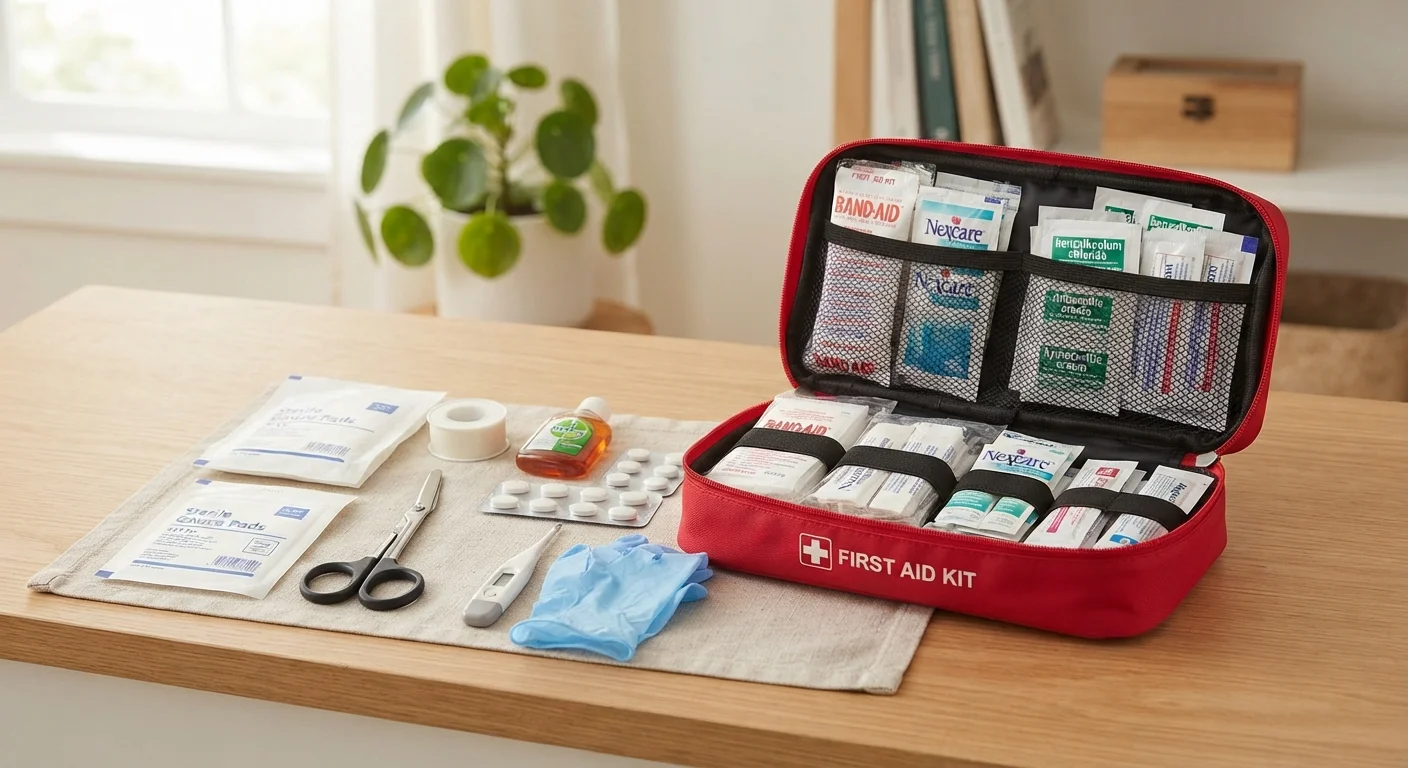
Work through the groups below when building or auditing your kit. The "must" items form a functional baseline. "Should" items address common situations that arise in family households. "Nice to have" items are practical additions if budget and space allow.
Wound care
Tools and protective equipment
Medications and treatments
Family-specific and reference items
For medications, follow label instructions and consult your pharmacist or physician before giving any over-the-counter medicine to children under two, or to anyone managing a chronic condition. Never stock prescription medications in a shared kit without clear labeling and adult-only access.
Medications require care around children
Store all medications in a separate, clearly labeled section of the kit, and keep the entire kit out of reach of young children. Over-the-counter medicines, including pain relievers and antihistamines, can cause serious harm if a child takes the wrong dose. If you suspect a child has ingested any medication, contact Poison Control (1-800-222-1222 in the United States) or call 911 immediately.
Do not use expired supplies
Expired bandages, antiseptics, and medications may not perform as intended. Adhesives lose their hold, antiseptics lose effectiveness, and medications can degrade past their expiration dates. Check dates at every review and dispose of expired items through your local pharmacy take-back program where available.
Choosing where and how to store the kit
Where you keep a first-aid kit matters as much as what is inside it. The goal is quick adult access combined with safe placement away from young children.
A high cabinet in a central room, such as a hallway or kitchen, works well for most households. Bathrooms are convenient but humidity accelerates the degradation of adhesives, sterile packaging, and some medications, so avoid storing a kit directly above a shower or next to a sink.
Use a container with a secure latch and a clear exterior or label so every adult in the home can identify it immediately. If you live in a larger space, consider a second smaller kit for a car or a bag. For vehicle storage ideas and general organization in compact living spaces, the guidance in storage and organization for compact family homes applies directly.
Hard-sided container with secure latch
Keeps contents organized and protected from moisture, and prevents young children from accessing the kit unsupervised.
Waterproof labels or a label maker
Marks compartments and individual items so any adult can find what is needed quickly.
Zip-lock bags (assorted sizes)
Separates and organizes categories of supplies within a larger container, keeping wound care items separate from medications.
Permanent marker
Records the date a kit was last restocked and marks expiration dates on items lacking clear packaging.
Keeping the kit current
A first-aid kit is only useful if its contents are in working condition. Set a calendar reminder every six months, or align the review with daylight saving time changes, to check expiration dates and restock used or expired items.
After any use of the kit, replace what was used before returning it to storage. Do not wait for the next scheduled review. Items to check carefully include adhesive bandages (the adhesive weakens over time), antiseptic wipes (they dry out once packaging is compromised), and any medications, which lose potency after their printed expiration date.
Beyond the physical supplies, consider whether everyone in your household who might use the kit knows basic first-aid procedures. The American Red Cross offers in-person and online first-aid and CPR courses for adults. Knowing how to use what is in the kit makes a measurable difference in minor emergency situations. Your family's preventive care plan is a good time to discuss emergency preparedness with your provider, and if you are ever uncertain whether a situation needs a doctor or an emergency room, the guidance in urgent care vs. the emergency room can help your family make that call faster.
This article is for general informational purposes only and does not constitute medical advice. Always consult a qualified healthcare professional for guidance specific to your family's health needs, and call 911 in any medical emergency.