

Key Takeaways
Why deferred maintenance costs more
Families often delay repairs to protect cash flow, but the math usually works against that approach. A worn timing belt costs far less to replace on a schedule than the engine damage caused when it snaps unexpectedly. The same logic applies to brake pads, coolant flushes, and transmission fluid changes. Small, predictable expenses prevent large, unpredictable ones.
The family car maintenance schedule guide covers what needs attention and roughly when. Pairing that schedule with a basic understanding of repair costs helps families make decisions from a position of knowledge rather than urgency. Urgency almost always costs more.
Deferred maintenance also creates safety risk that is separate from cost. Tires worn past the legal tread depth, brake fluid that has absorbed moisture, or a cracked serpentine belt can all contribute to a loss of vehicle control. For a car carrying children, those are not acceptable trade-offs.
Repairs families can handle and ones they should not
A clear line exists between maintenance tasks that are genuinely safe for an informed owner and repairs that require professional training, specialized tools, or both.
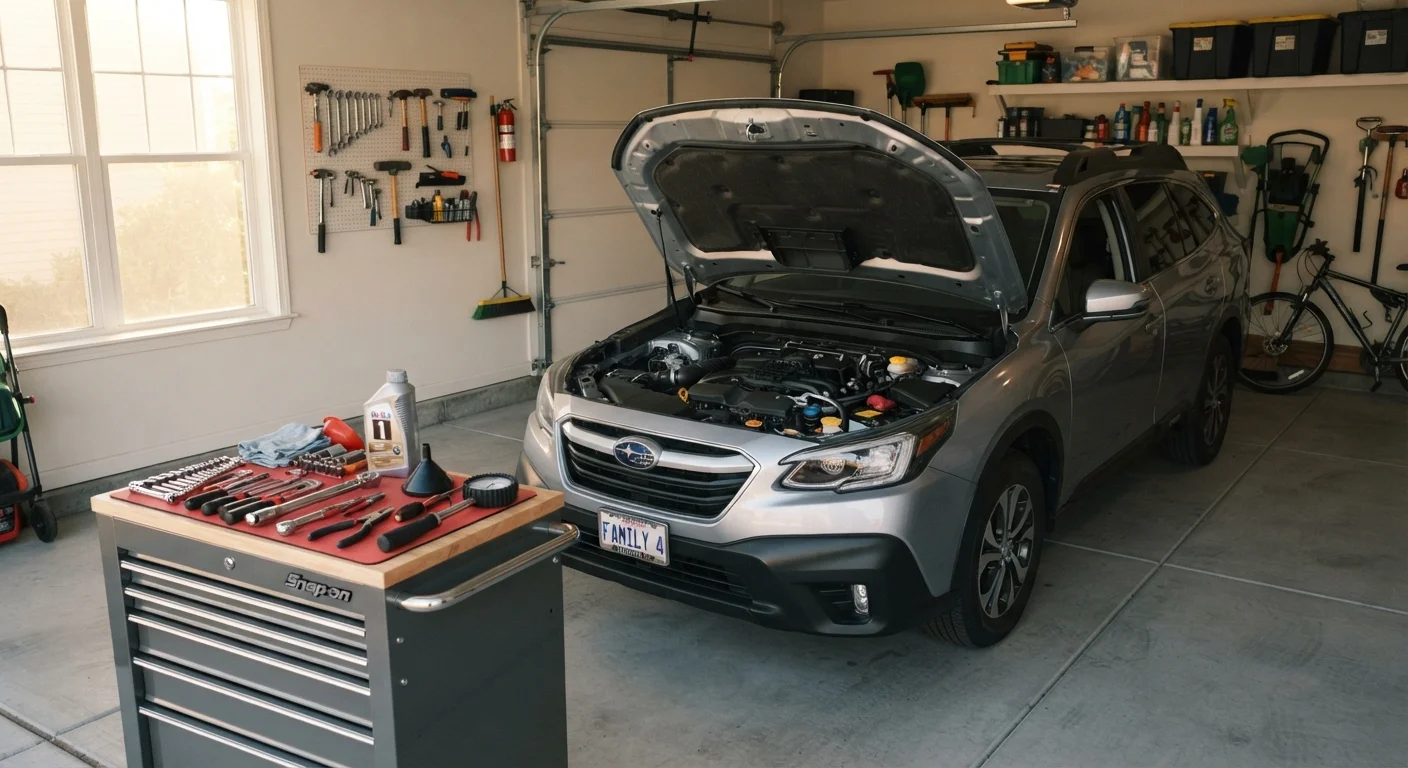
Tasks that fall within reach for most owners with basic mechanical confidence include replacing cabin air filters, swapping wiper blades, changing engine air filters, topping off fluids as directed in the owner's manual, and rotating tires when a torque wrench and a reliable jack stand are available. These carry low risk when performed carefully and according to vehicle-specific instructions.
Tasks that should go to a qualified mechanic include anything involving the brake hydraulic system, suspension geometry, airbag components, fuel system repairs, and electrical diagnostics. The consequences of errors in these areas can be severe and are not reversible by a second attempt. This mirrors the guidance in the home maintenance DIY vs. hire professional article: the question is not whether a task looks manageable, but what happens if something goes wrong.
Getting fair prices without a runaround
Labor rates, parts markups, and diagnostic fees vary widely between shops. Calling two or three independent repair shops for written estimates before authorizing work is a straightforward way to understand what a fair price looks like for a given job. National chains, dealerships, and independent mechanics each have different cost structures and strengths depending on the repair type.
Asking for the old parts back after a repair is completed is a reasonable request that most reputable shops accommodate. It provides confirmation that the parts were actually replaced. Asking for a written breakdown of parts cost versus labor cost also makes it easier to identify where a quote is high.
Understanding your vehicle's reliability history helps set expectations. The car reliability scores guide explains what survey data and complaint records actually indicate, which can help families anticipate which systems on a particular vehicle tend to need attention.
Building a repair buffer into the family budget
Vehicle repairs are not if, they are when. Setting aside a fixed amount each month into a dedicated car fund changes a repair from a financial crisis into a planned expense. Even a modest monthly contribution builds enough cushion over a year to cover many common repairs without touching other budget categories.
Families reviewing their overall financial picture may find the household budget warning signs article useful for identifying where that monthly contribution can come from. The same habit of small, consistent contributions that works for groceries and energy bills applies here. The energy costs at home guide shows how the same principle of focusing effort where it has the most effect applies across household expenses.
Depreciation is another factor worth understanding. A vehicle that requires frequent repairs and loses value quickly costs more to own than purchase price alone suggests. The car depreciation guide for families explains how those two costs interact over time.
This article provides general educational information about vehicle maintenance and repair decisions. It is not a substitute for advice from a qualified mechanic familiar with your specific vehicle. Always follow your manufacturer's guidelines and consult a licensed professional for any repair involving safety-critical systems.