

Key Takeaways
Start here
Why national parks work for family travel
Understand costs
Passes, fees, and what they actually cover
Plan where to sleep
Campsite types and lodging options
Match to your family
Age-appropriate activities and accessibility
Get the timing right
Timing your visit and planning around crowds
Why national parks work for family travel
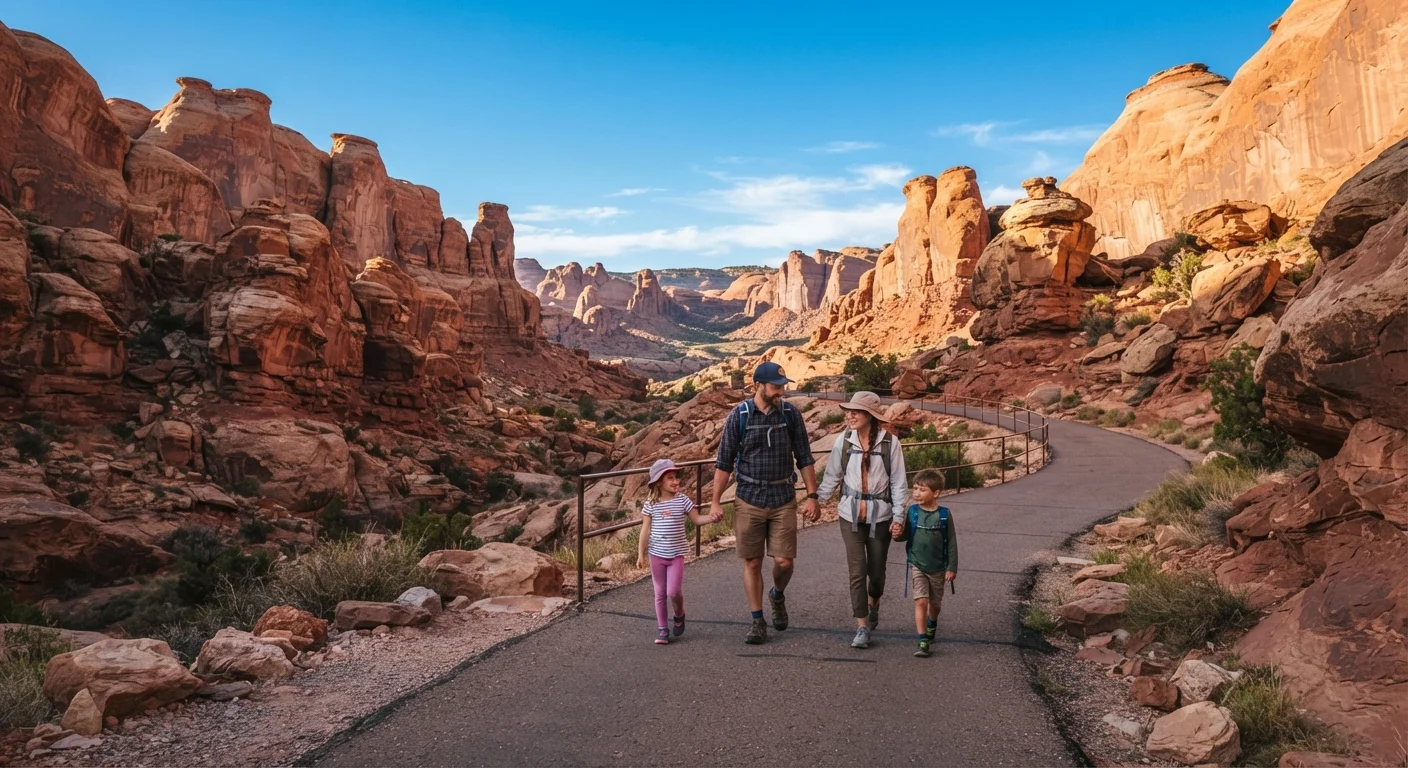
US national parks are one of the few travel categories where the core experience does not require spending more to get more. Entry fees are fixed regardless of how long you stay during a visit, children under 16 always enter free, and the landscape itself is the activity. That structure suits families with wide age ranges and mixed interests.
The variety across the system is also practical. A family comfortable with a 3-mile walk has different options than one managing a toddler and a grandparent, but both will find something workable at most large parks. The National Park Service (NPS) maintains visitor centers, paved accessible paths, ranger programs, and campgrounds at hundreds of sites across the country.
For families already planning a road trip, national parks integrate naturally into the route. See our guide to budgeting a family road trip for a framework on mapping stops and estimating real travel costs.
Per-vehicle fee
A single entrance charge that covers all passengers in one private vehicle for a specified number of days, regardless of how many people are inside.
America the Beautiful pass
A federally issued annual pass that covers entrance fees at national parks and other federal recreation sites across the US for one full year.
Junior ranger program
A free NPS activity program where children complete a park-specific workbook and earn an official badge, available at nearly every national park.
Developed campground
A campground with managed sites and basic amenities such as flush toilets, running water, and sometimes electrical hookups, as opposed to a primitive backcountry site.
Timed entry reservation
A system some parks use during peak season that requires visitors to reserve a specific arrival window in advance, separate from any campsite reservation.
Every Kid Outdoors
A federal program that provides a free America the Beautiful pass to all US fourth-grade students and their families for one school year.
Passes, fees, and what they actually cover
Most national parks charge a per-vehicle entry fee, which covers everyone in the vehicle for a set number of days, typically 7. Fees vary by park, so check the NPS website for the specific site you plan to visit.
The America the Beautiful annual pass covers entrance fees at over 2,000 federal recreation sites, including all national parks. One pass covers an entire private vehicle at per-vehicle fee sites, or the pass holder plus three adults at per-person fee sites. Fourth-grade students can get a free version through the Every Kid Outdoors program, and active military families receive the pass at no cost. For a family visiting two or more fee-charging parks in a year, the math on the annual pass frequently favors buying it.
The pass does not cover camping fees, tours, or concession services. Those are separate costs. For a detailed breakdown of what is and is not included, see what annual park pass programs actually cover.
Campsite types and lodging options
In-park campgrounds fall into a few categories. Developed campgrounds have tent and RV sites with amenities such as flush toilets, potable water, and sometimes electric hookups. Primitive campgrounds have fewer or no utilities. Backcountry camping requires a permit and is not suited to most families with young children.
Reservations for developed sites at high-demand parks open months in advance on Recreation.gov, and they fill fast for summer weekends. If developed sites are booked, nearby national forest campgrounds or state park campgrounds are often available and less crowded, though they are outside the national park boundary.
Some parks have lodge accommodations managed by concession operators. These run considerably higher per night than campsites but eliminate the gear requirement entirely. Gateway towns outside park entrances also have motels and vacation rentals, which work well for families who want a private bathroom and a kitchenette without camping.
Age-appropriate activities and accessibility
The NPS junior ranger program is available at almost every park and is well-matched to children roughly ages 5 through 12. Kids complete an activity booklet, answer questions about the park's ecology or history, and receive a badge at the visitor center. It costs nothing and gives children a structured task throughout the visit.
For toddlers and preschoolers, short flat walks, wildlife viewing from pullouts, and time at visitor centers with interactive exhibits work better than long hikes. Many parks have stroller-accessible paved paths. Acadia's carriage roads, the South Rim Trail at Grand Canyon, and Yellowstone's boardwalk trails around thermal features are examples of accessible routes that do not require significant fitness.
Families with members who use wheelchairs or have other mobility needs should check the accessibility section of each park's NPS page before visiting. It lists specific accessible routes, parking, restroom locations, and whether accessible shuttle service operates. Conditions can vary seasonally, so verifying directly with the park visitor center before travel is worth the call.
If you are weighing a national park trip against other family vacation types, the pre-trip checklist for theme park visits covers the planning decisions specific to that alternative.
Timing your visit and planning around crowds
Peak season at most parks runs from Memorial Day through Labor Day. Entrance lines, campsite competition, and trail congestion are all at their highest during this window, particularly at well-known parks like Zion, Yellowstone, and Yosemite.
Visiting in late spring (May to early June) or early fall (September to mid-October) can reduce crowds meaningfully at many parks while keeping most facilities open. Some parks require timed entry reservations during peak periods; these are announced on the NPS site and Recreation.gov ahead of each season. Verify requirements for your target park well before your travel date, as reservation systems change year to year.
Winter visits are possible at lower-elevation parks in warmer climates and at parks with designated winter activities, but facilities including some campgrounds and visitor centers may close. Off-season travel with kids covers the real considerations families should weigh before booking outside peak season.
For families considering coastal alternatives to parks, family-friendly US beach destinations beyond Florida gives a regional overview with cost and seasonality notes.